
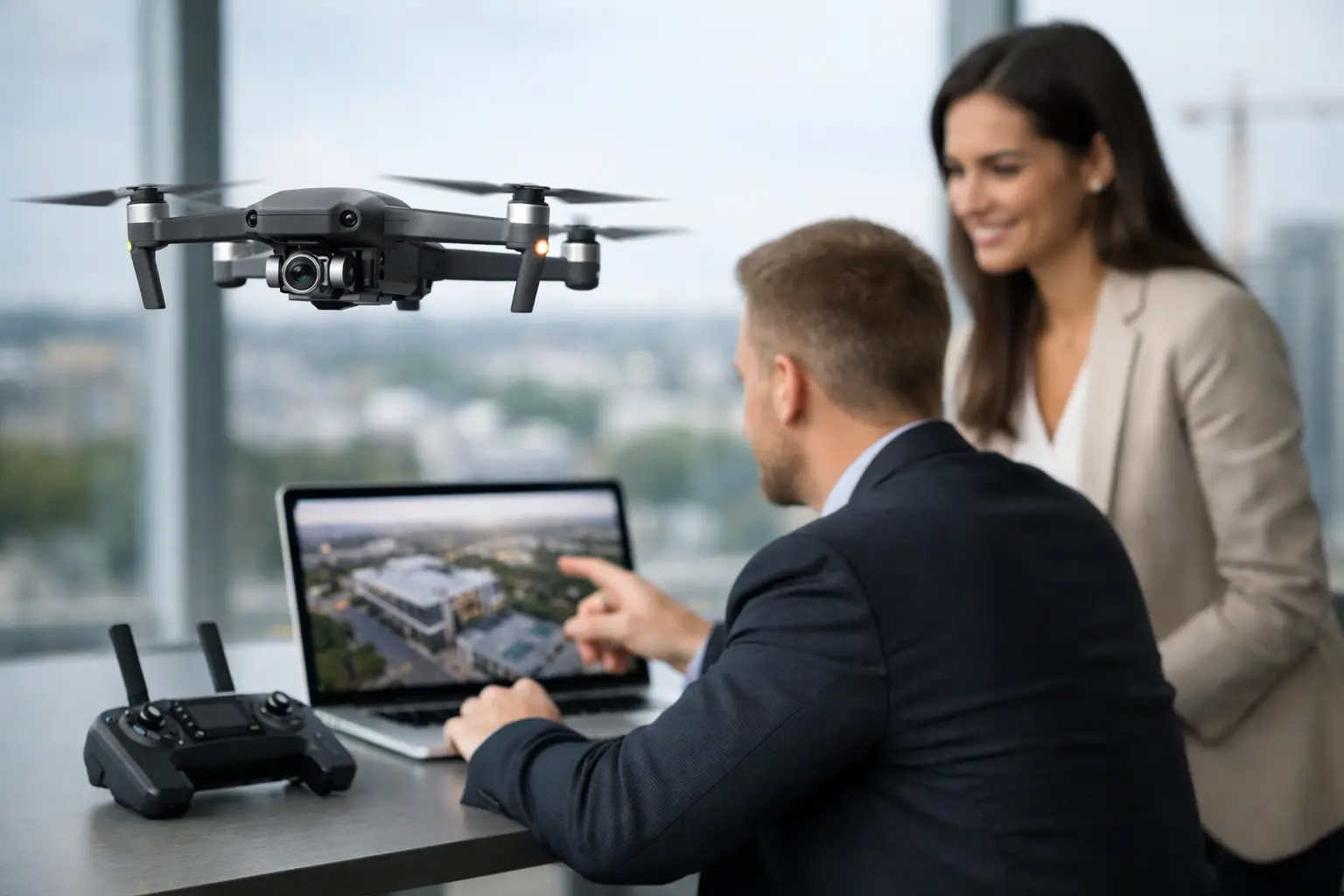
A sweeping aerial shot can look impressive. That alone is not a business case. Drone video for business earns its place when it adds context you cannot get from the ground, helps people understand a site faster, or makes a message more credible because viewers can actually see scale, layout and activity in one frame.
That matters for organisations selling property, recruiting in regional locations, documenting infrastructure, promoting tourism, explaining industrial operations or reporting on project progress. In those settings, drone footage is not just visual garnish. It can clarify, reassure and persuade. The value comes from what the footage helps the audience understand and do next.
Where drone video for business delivers real value
The strongest use of aerial footage is often simple. It shows relationships between people, place and process more clearly than a ground camera can. For a property developer, that might mean showing proximity to transport, coastline, retail or community infrastructure. For a manufacturer or mining business, it might mean making a large site legible in seconds. For a school or university, it can help prospective families grasp campus scale, access and facilities without needing to piece together separate shots.
There is also a credibility factor. When you are communicating with stakeholders, investors, board members or government audiences, clear visual documentation carries weight. Aerial footage can show project progress, environmental context, logistics routes or operational footprint with a level of transparency that static images often cannot match.
Recruitment is another strong use case. If you need to attract talent to a site outside a metro centre, drone footage can help people picture the environment before they ever visit. That is especially useful in sectors where location is part of the decision-making process, including mining, health, education and large industrial operations.
The common thread is utility. Good drone footage helps the right audience understand something important, quickly.
What drone footage does better than ground video
Ground-based filming is still where much of the human story sits. Interviews, detail shots, customer interactions and day-to-day activity all live there. Drone footage works best when it complements that material rather than trying to replace it.
Its strength is perspective. It can show the full site, reveal movement across a precinct, establish geography and create a sense of order. That is especially useful in sectors with large footprints or complex environments. A hospital campus, logistics facility or civil works project can be difficult to explain with only interior or eye-level shots. One well-planned aerial sequence can solve that problem quickly.
It can also make video assets work harder across formats. The same aerial footage might appear in a brand film, a tender presentation, a social cutdown, a recruitment campaign or a stakeholder update. When the footage has been planned around business use rather than just visual appeal, it becomes a flexible asset rather than a one-off shoot extra.
When drone video is the wrong choice
Not every brief benefits from sending a drone up.
If the message depends on trust, emotion or detailed demonstration, aerial footage should stay in a supporting role. A CEO message, staff profile, training module or product walkthrough usually needs intimacy and clarity more than height. In those cases, drone shots can help set the scene, but they should not carry the communication.
There are practical limits too. Weather, airspace restrictions, safety requirements and site access all affect what is possible on the day. In built-up areas, near airports or around sensitive infrastructure, approvals and operating conditions can narrow the brief considerably. That does not make drone filming impossible, but it does mean the production approach has to be grounded in planning rather than assumptions.
There is also the issue of overuse. When every second shot is an orbit, rise or reveal, the footage starts to feel generic. Viewers stop seeing information and start seeing a style device. For business audiences, that is usually the wrong trade-off.
Planning drone video for business properly
The quality of the result is decided well before the aircraft leaves the ground. The first question is not where the drone flies. It is what the audience needs to understand.
If the goal is to support a property campaign, the priority may be orientation and amenity. If the goal is recruitment, the story might focus on location, team environment and the scale of operations. If the goal is a project update, you may need repeatable angles that document change over time. Those are different communication jobs, which means they need different shot plans.
A commercially useful production brief usually covers the purpose of the video, the audiences it needs to reach, the delivery formats, site constraints and the approvals required. This is where experienced production matters. A drone operator can capture aerial footage. A strategic production partner plans how that footage fits the wider communication piece.
That includes thinking through how aerials will sit alongside interviews, motion graphics, on-site audio, photography and edited cutdowns. The best result is rarely a collection of nice shots. It is a coherent asset suite built around a clear objective.
Compliance, safety and reputation matter
Drone work in Australia is not just a technical task. It is a compliance issue and, in many sectors, a reputation issue as well.
For organisations operating in government, education, health, infrastructure or industrial environments, safety and process are not optional extras. Filming on active sites, near people, around traffic or within regulated airspace requires proper operational planning. That can include risk assessment, permissions, scheduling around site activity and close coordination with facility or communications teams.
This is one reason business buyers should be wary of treating drone footage as a simple add-on. If the project sits inside a larger communications initiative, the aerial component needs to match the same standards as everything else – reliable crew, clear approvals, practical scheduling and footage captured for the actual brief.
A polished result means very little if the process creates operational headaches.
How to judge whether aerial footage will pay off
The answer is not always obvious from the shot list. It is usually clearer when you look at the role the video plays in the organisation.
If the video is helping someone make a higher-stakes decision – apply for a role, inspect a development, understand a project, trust a delivery partner, approve a proposal – aerial footage can be highly effective because it gives a faster and fuller picture. It reduces ambiguity.
If the video is mostly explanatory at a close level – software onboarding, policy communication, interview-led messaging or detailed procedural training – the return may be lower. In those cases, budget may be better directed into scripting, interviews, animation or stronger edit structures.
That is the real commercial lens. Not whether drone footage looks good, but whether it improves understanding enough to justify the production effort.
Production quality still matters
Even when the business case is sound, poor execution can flatten the impact.
Useful drone footage is stable, well-timed, well-composed and captured in the right light. It also needs to be edited with restraint. The goal is not to show every aerial angle gathered on the day. The goal is to use the right shots to move the story forward.
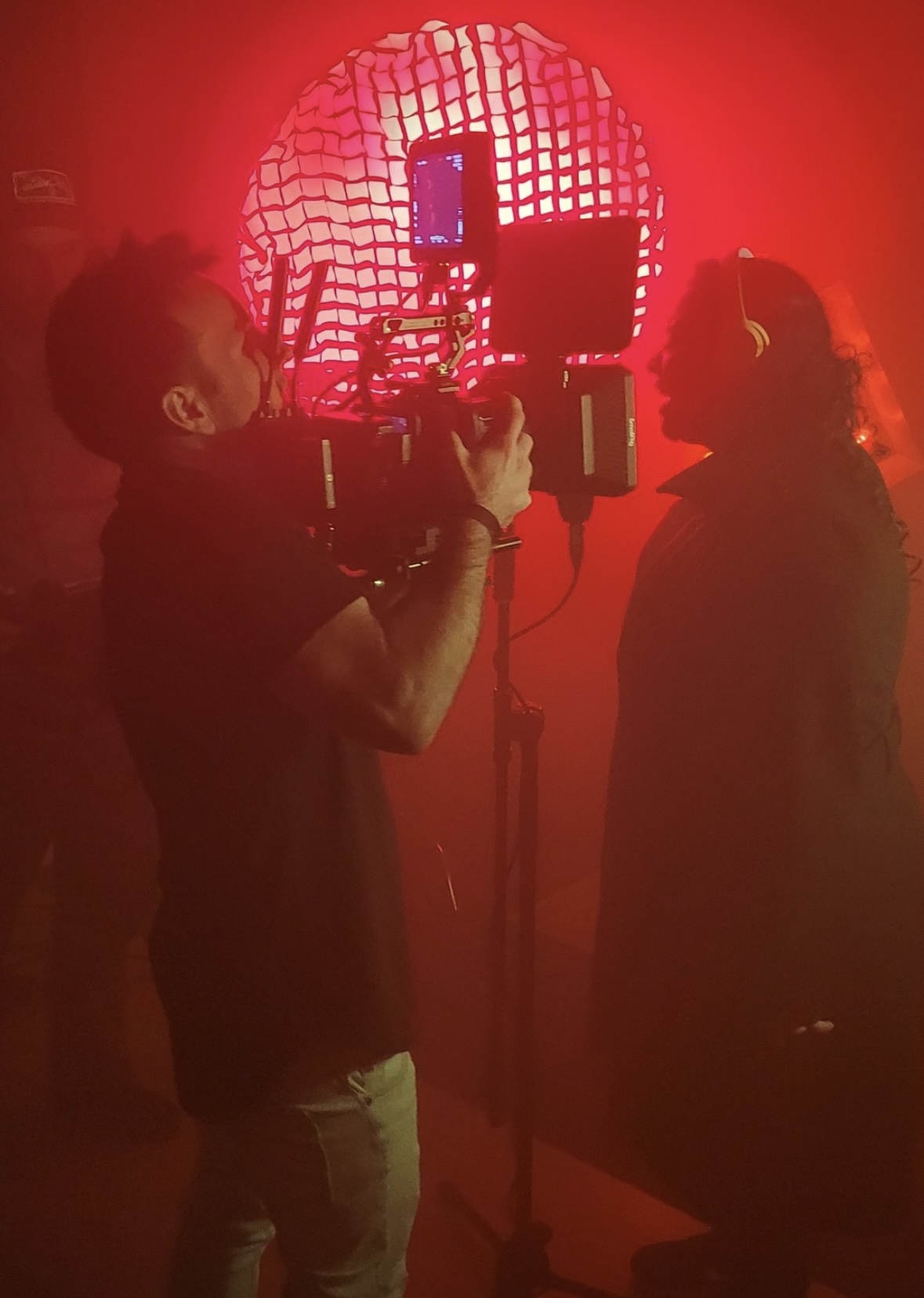
Sound design, graphics, voiceover and sequencing all influence whether aerial footage feels purposeful or ornamental. A wide site overview paired with clear narration can explain more in ten seconds than a minute of fragmented visuals. That is why drone filming works best inside a full production process rather than as a disconnected technical service.
For organisations commissioning content across multiple channels, consistency matters too. The aerials should match the broader visual standard of the brand and fit the campaign’s tone, not feel like stock footage dropped into the cut because it looked dramatic.
A practical way to think about drone video for business
Treat it as a communication tool with a specific job. If it can show scale, place, progress or context better than any other method, it is likely worth considering. If it is there to make the edit feel more cinematic, the case is weaker.
The best aerial footage is usually the footage that viewers barely notice as a technique because it makes the message easier to understand. That is where strategy and production need to work together. For brands, institutions and government-related organisations, that is often the difference between content that looks polished and content that actually performs.
At THIRTY3SOUTH Films, that is the standard worth aiming for. If the footage does not help the business outcome, it is just altitude.
Before you commission your next video, ask a sharper question than do we want drone shots. Ask what the audience needs to see from above to believe, understand or act. That is where the real value starts.