

A polished claim from your own organisation will only take a buyer so far. Client testimonials carry different weight because they let an independent voice describe the problem, the experience and the result in terms other prospective customers recognise. For organisations selling complex services, managing long buying cycles or communicating with multiple stakeholders, that proof can move a conversation from interest to confidence.
The most effective testimonials are not compliments collected at the end of a job. They are evidence assets. Planned properly, they support sales teams, campaign activity, tender responses, recruitment, stakeholder communication and your wider brand position. The difference lies in what the story proves and how easily people can find, understand and trust it.
Why client testimonials influence complex decisions
In B2B purchasing, the person watching your content may not be the final decision-maker. A marketing manager may need to persuade procurement, a project lead may need executive approval, or a communications team may be reporting to a board. Each person is assessing risk as much as capability.
A credible client story reduces that perceived risk. It shows that an organisation like theirs had a real challenge, chose a supplier, experienced a workable process and achieved an outcome. This is more persuasive than broad statements about quality because it provides context. A viewer can see the scale of the project, understand the stakes and decide whether the experience is relevant to their own situation.
Video adds another layer. Tone of voice, body language and the environment all help an audience judge whether the speaker is genuine. A concise interview filmed on site can communicate operational credibility that a paragraph of text cannot always carry. That does not mean every testimonial needs a film crew. Written quotes are useful for quick proof points, while case study videos are better suited to higher-value decisions, longer campaigns and stories with visual evidence.
The format should match the job. A one-line quote on a service page cannot explain a complex implementation. Equally, a four-minute film may be excessive when a buyer simply needs validation before completing an enquiry form.
Start with the business outcome, not the compliment
“Great team to work with” is pleasant, but it rarely changes a purchasing decision. It says little about what was delivered, why it mattered or what another organisation can expect.
A stronger testimonial begins with a clear communication objective. Perhaps your organisation needs to demonstrate capability in regional delivery, reassure prospects about safety and compliance, show that a new process improved staff adoption, or substantiate a campaign result. Once that purpose is clear, select a client and project that can credibly speak to it.
The best stories usually have three parts: a genuine challenge, a considered response and an observable outcome. The outcome does not always need to be a dramatic percentage increase. In many sectors, valuable results are more practical: clearer stakeholder understanding, a faster approval process, improved consistency across sites, a safer induction experience or a campaign delivered on schedule.
Specificity creates credibility. “The team understood the complexity of working across multiple locations and gave us a delivery process we could rely on” is more useful than “They were fantastic”. It also gives prospects a clearer reason to choose you.
Choose the right voice
The most senior client is not automatically the best spokesperson. A senior executive can provide authority, but the person who managed the project may better explain the day-to-day experience. For a technical or operational project, an on-site leader may bring the detail that makes the story believable.
Consider who your audience needs to hear from. If you are speaking to HR leaders, a people and culture contact may be the most relevant voice. If the goal is to support a property or infrastructure proposal, a project director might carry more weight. Where several perspectives matter, a short series of focused testimonials can be more effective than asking one person to represent everything.
How to capture testimonials people believe
Good testimonial interviews do not rely on a scripted endorsement. In fact, overly polished language can make a client sound coached. A structured conversation is more effective: it keeps the story useful while allowing the speaker’s natural language and personality to come through.
Before filming, agree on the purpose, intended audience, channels and approval process. Make it clear that the participant does not need to memorise answers. They need enough context to think about the project and prepare examples. A pre-interview conversation often uncovers the strongest angles, including details that may not have appeared in a project debrief.
Questions should invite stories rather than yes-or-no answers. Ask what prompted the project, what was at stake, what concerns they had at the outset, how the process worked and what changed after delivery. Then follow up: what did that mean for the team, customers, stakeholders or organisation?
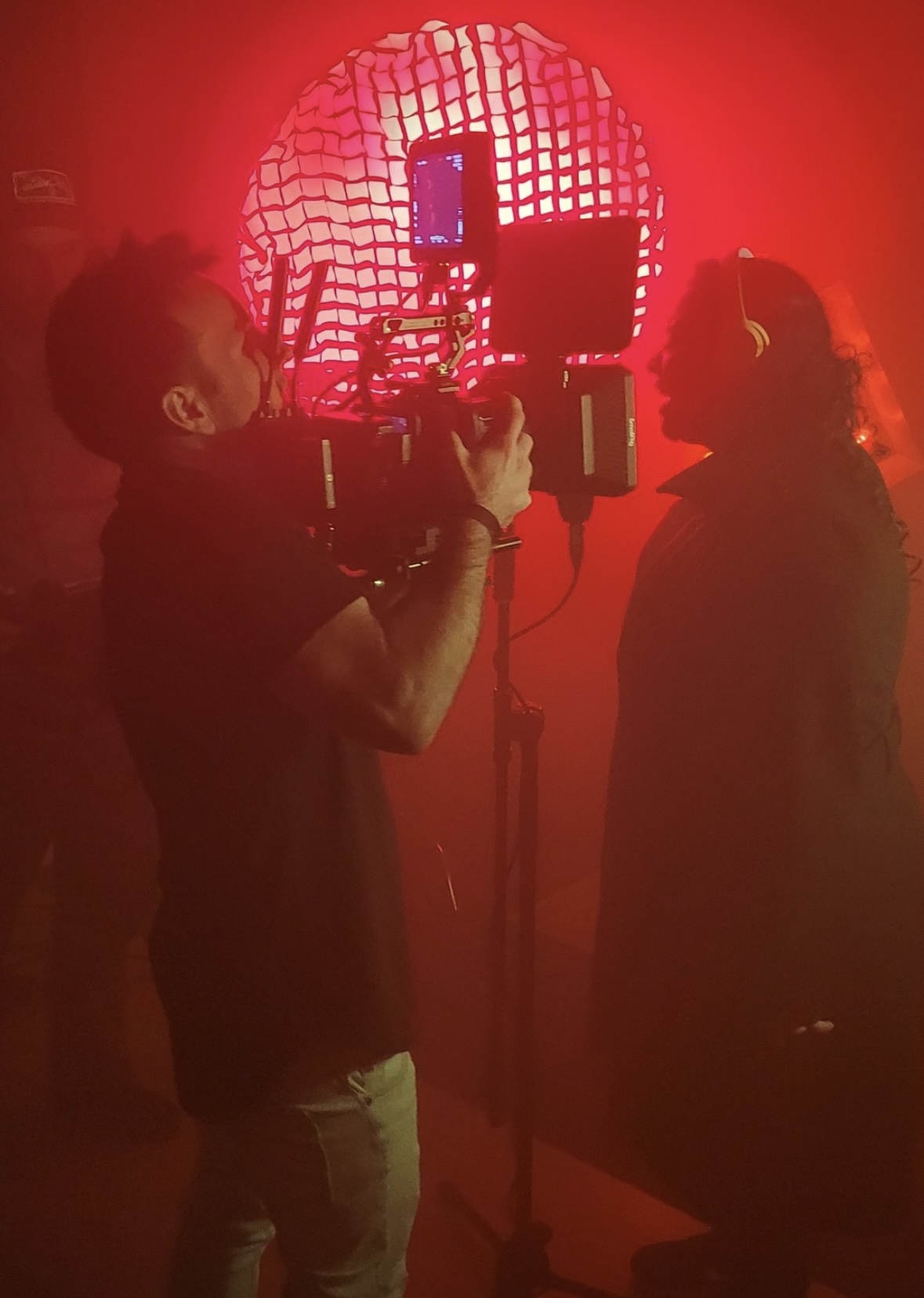
For a video testimonial, the setting matters. Film where the work is visible where possible: on a site, in a learning environment, at a facility or alongside the people using the outcome. Relevant visuals make the account easier to follow and reduce the temptation to cover every word with generic footage. Careful lighting, clear sound and a relaxed interview process also matter. Production quality should support trust, not distract from it.
For sensitive sectors such as government, health, education, mining or defence-adjacent work, approvals require extra care. Confirm what can be said about results, locations, internal processes, people and branding before the camera is set up. It is far more efficient to establish boundaries early than to remove the substance of a story during legal or stakeholder review.
Build a testimonial into a usable content asset
A testimonial should not have one brief appearance on a website and then disappear. Plan a primary version and a set of supporting cut-downs from the outset. One well-produced client story can provide a two-minute case study, short social edits, a sales presentation excerpt, still imagery, written pull quotes and internal proof for capability documents.
That approach is not about producing content for its own sake. It helps teams use the same credible story at the moments it is most needed. A business development team may use the full case study after an initial meeting, while a campaign audience may only need a 30-second outcome-led edit. An account manager may benefit from a short quote addressing project management and reliability.
Consistency matters, but avoid forcing every story into the same template. A recruitment testimonial may need warmth and culture. A project delivery story may need more operational detail. A brand partnership story may depend on creative collaboration. The common thread should be clarity: what was the challenge, what did your organisation do and why did it matter?
This is where an end-to-end production partner can add practical value. At THIRTY3SOUTH Films, testimonial production can be planned around the business purpose, from interview development and filming through to edits tailored for the channels where decision-makers will see them.
Protect credibility with accuracy and permission
A testimonial is only valuable while people trust it. Do not exaggerate outcomes, edit a speaker into saying something they did not mean, or present an old project as though it reflects a current offering without context. If a result depends on factors beyond your control, acknowledge that internally and frame the story accurately.
Obtain written permission that covers the intended use, duration, channels and any client branding. For video, agree who has final approval and how feedback will be managed. One clear decision-maker on the client side prevents late-stage, conflicting edits that can stall publication.
It is also wise to revisit older testimonials. Businesses change, personnel move on and services evolve. A story may remain relevant, but its wording, branding or claims may need an update. A regular review keeps your proof current and protects the relationship with the client who contributed it.
Measure whether the proof is doing its job
Views alone are a limited measure. A testimonial intended to support high-consideration sales may reach fewer people than a promotional campaign, yet still be highly valuable if it helps secure qualified meetings or strengthens a proposal.
Track performance against the role the asset was built to play. That may include completion rates for video, time spent on a case study page, enquiry quality, proposal feedback, sales-team usage, conversion from remarketing audiences or stakeholder response. Ask new clients how they came to trust you. Their answers often reveal whether testimonial content is appearing at the right point in the decision process.
The strongest client story is not necessarily the one with the biggest claim. It is the one that makes the next prospective client think, “They understood an organisation like ours, and they delivered a result we can rely on.”