

A new safety process can be technically sound and still be ignored. A recruitment campaign can have a generous budget and still attract the wrong people. A CEO update can contain all the right information and still leave staff asking, “What does this mean for me?” Corporate storytelling is what closes that gap between information and human response.
For organisations, storytelling is not about making every video emotional or cinematic for its own sake. It is the disciplined work of finding the people, stakes, proof and progression inside a business message, then presenting them in a way an audience can understand and act on. When done properly, it gives strategy a human form.
What corporate storytelling needs to do
A corporate story must earn attention, but attention is only the start. Its real job is to move a defined audience towards a business outcome: greater confidence in a brand, safer behaviour on site, stronger applications for open roles, support for a change program, or clearer understanding of a complex service.
That means the best story is rarely the one with the most dramatic visuals or the cleverest line. It is the one that makes the next step obvious. For a property developer, that may mean helping prospective buyers imagine life in a new precinct. For a manufacturing business, it may mean showing customers the care and capability behind the finished product. For a government department, it may mean making a public service feel accessible rather than procedural.
The underlying approach is consistent, even when the subject changes. Start with the audience, establish the tension or question they recognise, provide credible evidence, and give them a clear reason to respond. The delivery can be a two-minute brand film, a series of employee profiles, an animated explainer or a suite of short social assets. Format follows purpose.
Start with the communication problem, not the camera
Many video projects begin with a request for a corporate film. That description is too broad to guide good decisions. Before creative concepts, filming schedules or locations are discussed, the organisation needs to be clear about the problem it is trying to solve.
Is the audience unaware, unconvinced, confused or disengaged? Are they external customers, prospective employees, internal teams, investors, community stakeholders or a mix of groups with different needs? What should they think, feel or do after watching? Those questions shape everything from the script to the distribution plan.
A useful brief can be built around four decisions:
- the priority audience and the moment they will encounter the content
- the business outcome the video is expected to support
- the proof points that will make the message credible
- the action, conversation or behaviour that should follow
This work prevents a common mistake: attempting to say everything in one video. Organisations often have legitimate pressure to include every service, capability, leader and milestone. The result can become a polished catalogue rather than a story. A better approach is to choose one central message, then create supporting assets for the details different audiences need.
Find the human stakes behind the message
Business audiences are still people. They make sense of information through relevance, trust and feeling, even in highly regulated, technical or industrial settings. The human element does not require manufactured sentiment. It requires specificity.
Consider an internal change program. Rather than relying solely on senior leaders explaining a new operating model, the story may follow a team member whose day-to-day work will improve because of it. Their experience can make the operational benefit tangible, while leadership provides context and direction.
The same principle applies to safety, training and compliance communications. A list of rules explains what is required. A well-told scenario shows why it matters, where judgement is needed and how the correct action protects colleagues, customers or the public. The content remains accurate, but it is more likely to be remembered because the consequence is clear.
For external brand communications, customers and partners often provide the strongest proof. Their perspective shifts a claim from “we deliver quality” to a concrete account of how an organisation solved a problem, managed complexity or delivered under pressure. That credibility matters particularly in sectors where purchase decisions are high-value, long-cycle or subject to scrutiny.
Build credibility into the story
Corporate storytelling loses value when it overstates reality. Audiences are quick to recognise generic language, staged enthusiasm and claims that lack evidence. This is especially risky for government, education, health, mining and major infrastructure organisations, where trust is part of the brief.
Credibility comes from details that can be seen and heard: people doing real work, customers describing a genuine outcome, leaders speaking plainly, and environments that reflect the organisation as it is. It can also come from data, process and independent validation, provided those elements are used to support the story rather than overwhelm it.
There is a trade-off here. Real locations, real employees and operational sites create authenticity, but they can add approvals, access requirements and production complexity. Highly scripted content offers greater control, but can feel less believable if it is too polished or detached from the workplace. The right balance depends on the audience, risk profile and message.
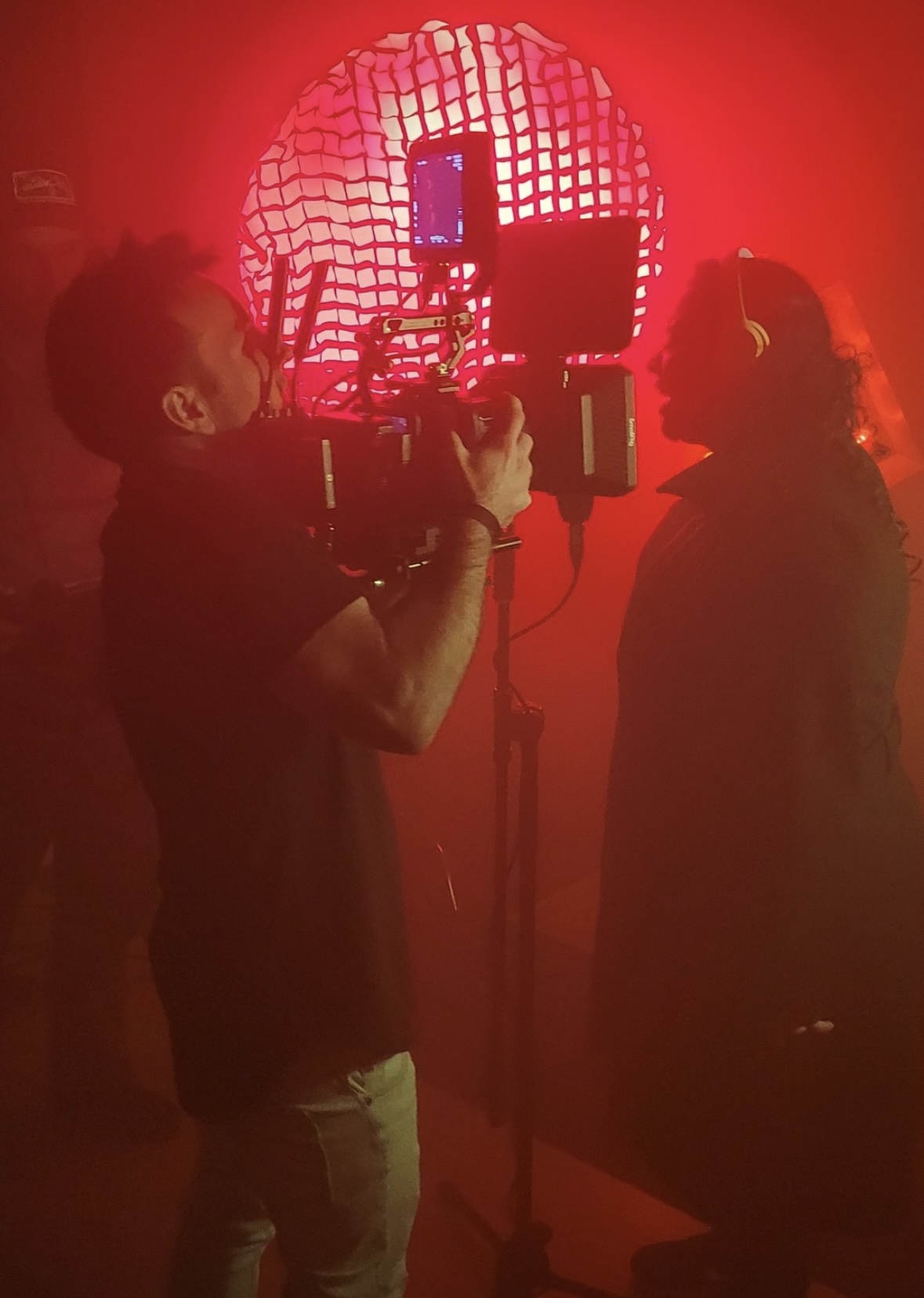
A strategic production partner helps make these decisions early. That includes identifying the right contributors, planning interviews that draw out useful insight, managing stakeholder approvals and designing a production process that respects operational realities. At THIRTY3SOUTH, that planning is treated as part of the communication work, not an administrative step before filming.
Give each channel a role
A strong story can underperform if it is delivered as one long video and posted once. Corporate audiences consume content in different places and at different levels of attention. An executive may watch a full case study before a decision. A prospective candidate may first see a short employee clip on a mobile. A staff member may need a concise training module they can revisit on demand.
This does not mean every project needs content for every channel. It means the delivery plan should match the communication journey. A flagship film may provide the core narrative, while shorter edits introduce a key message, answer common questions or direct viewers to a longer resource. Stills, photography, motion graphics and cut-downs can extend the value of a shoot when planned from the outset.
The practical benefit is efficiency, but there is a strategic benefit too. Repetition across formats helps important messages land without forcing an audience to absorb everything at once. The tone and visual language remain consistent, while the level of detail changes according to context.
Measure whether the story performed its job
View counts alone do not tell you whether a corporate video worked. They can be useful for judging reach, but performance needs to connect back to the original business objective.
For recruitment, useful indicators may include the quality of applications, careers-page engagement or reduced time to fill roles. For internal communications, teams may look at completion rates, manager feedback, questions raised after launch or adoption of a new process. For a campaign, enquiry quality, event registrations, stakeholder sentiment and sales support may matter more than raw impressions.
Not every result can be attributed to one piece of content. Business decisions are influenced by timing, media spend, market conditions and other communications. Still, setting a practical measurement plan before production creates better content. It keeps the story focused and makes it easier to learn what to retain, refine or test in the next campaign.
Make the process workable for the organisation
The strongest corporate storytelling respects two realities at once: good creative needs room to develop, and organisations need certainty around budget, approvals, safety, access and delivery. These are not opposing needs. Clear strategy and pre-production give creativity a firmer foundation.
A well-managed project defines decision-makers early, agrees on the message hierarchy, identifies risks before the shoot and sets realistic review points. It also plans for the people being filmed. Employees and customers are not professional talent, and they should not be expected to sound like they are. Thoughtful interviewing, a calm set and clear preparation produce more natural contributions than asking someone to memorise a page of copy.
The best corporate stories do not ask an audience to admire an organisation from a distance. They let people see the value it creates, the standards it works to and the people affected by its decisions. Start with the change your audience needs to make, then tell the most truthful story that gives them a reason to make it.